And in the same shewing, sodeinly the trinity fulfilled my hert most with joy. And so I undertode it shall be in heaven without end, to all that shall come ther. For the trinity is God, God is the trinity. The trinity is our maker, the trinity is our keper, the trinity is our everlasting lover, the trinity is our endlesse joy and our blisse, by our lord Jesu Christ and in our lord Jesu Christ. And this was shewed in the first sight and in all. For wher Jhesu appireth the blessed trinity is understand, as to my sight. 1
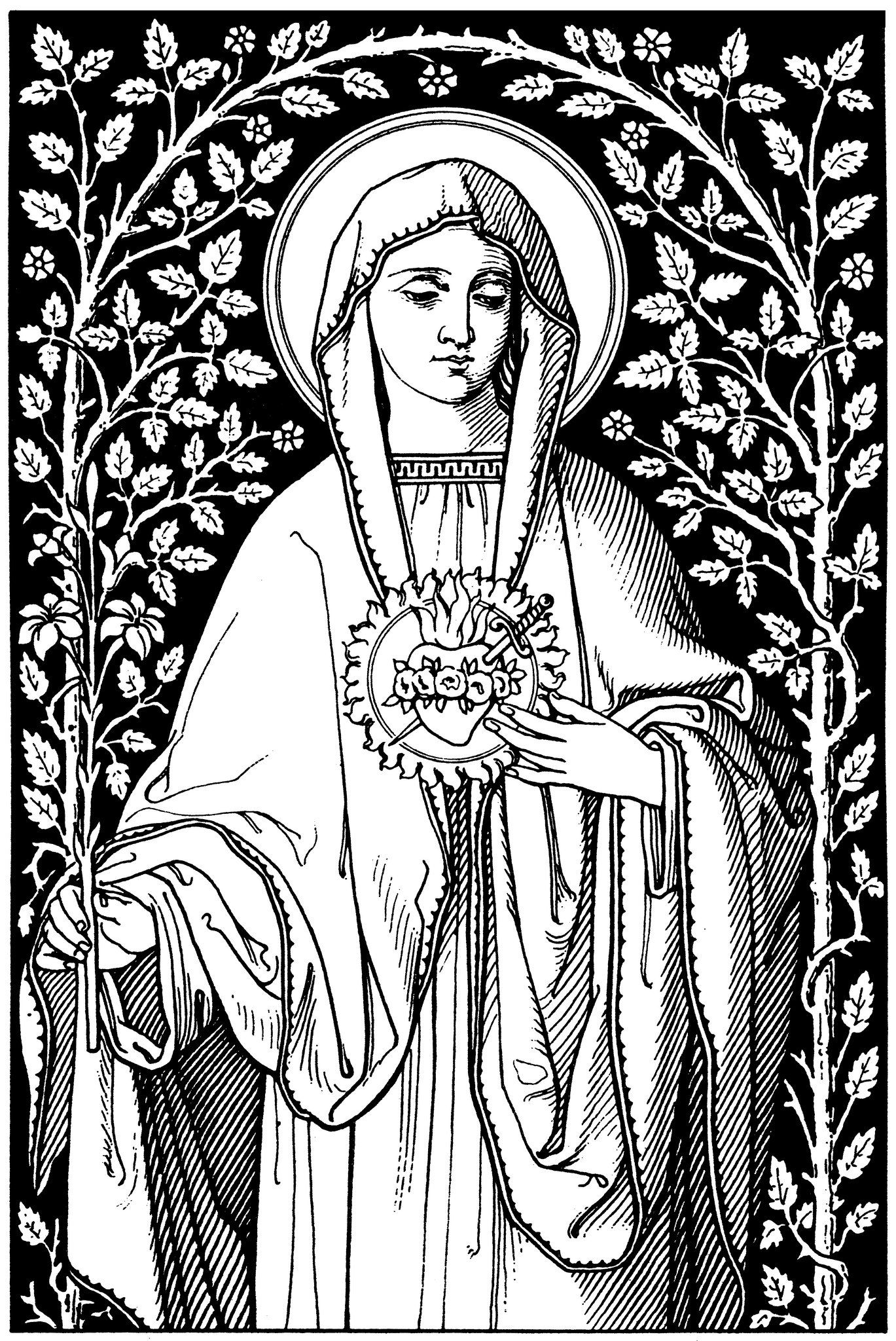
This passage of Julian’s text follows her description of the blood of Jesus trickling down from under the garland or crown of thorns. This bleeding is a physical expression of the kenotic love that is the source of the Incarnation, since it is at the very heart of the Triune God.
In a sermon preached on September 14, 1924, Father Sergius Bulgakov preached a sermon that has come to be known as “The Power of the Cross.” In it, he teaches:
[T]he cross made of wood is a symbol of the eternal cross, the revelation of the mystery of the cross. The sign of the cross is written upon the world as a whole, for, in the words of the Church anthem, it is the ‘four pointed power’ binding together the ‘four corners of the world’ as ‘height, breadth, and depth’. It is written too in the image of man with his arms outstretched: Moses and Joshua praying with their arms uplifted prefigured the Crucified. The form of the body calls forth, as it were, the tree of the cross, for it is itself a cross, the centre of which is the heart. In the image of the cross the Creator inscribed his own image in the world and in man, for according to the testimony of the Church, the cross is the divine image imprinted upon the world. What does the sign mean? It proclaims God’s love, and in the first place God’s love for creation. The world is created by the power of the cross, for God’s love for creation is sacrificial. The world is saved by the cross, by sacrificial love; it is blessed by the cross and overshadowed by its power. But the mystery of the cross is even more profound, for it wondrously contains the image of the tripersonal God, of the Trinity in unity. The Church teaches that it is the symbol of the unfathomable Trinity, the three-membered cross bearing the tri-personal image of the Trinity. The cross is the revelation of the Holy Trinity, and the power of the cross is a divine power. When we call in prayer upon the incomprehensible, invincible, and divine power if the precious life-giving cross, we pray to the Source of life, the Trinity in unity, one and divine in life and substance. The cross is God himself in his revelation to the world, God’s power and glory.
God is love, and the Holy Cross is the symbol of divine love. Love is sacrificial. The power and flame, the very nature of love is the cross, and there is no love apart from it. The cross is the sacrificial essence of love, since love is sacrifice, self-surrender, self-abnegation, voluntary self-renunciation for the sake of the beloved. Without sacrifice there can be no acceptance, no meeting, no life in and for another; there is no bliss in love except in sacrificial self-surrender which is rewarded by responsive fulfillment. The cross is the exchange of love, indeed love itself is exchange. There is no other path for love and for its wisdom than the path of the cross. The Holy Trinity is the eternal cross as the sacrificial exchange of Three, the single life born of voluntary surrender, of a threefold self-surrender, of being dissolved in the divine ocean of sacrificial love. 2
Endnotes
- Julian of Norwich, The Writings of Julian of Norwich, Eds, Nicholas Watson and Jacqueline Jenkins. University Park, The Pennsylvania State University Press, Chapter 4, lines 1-4, page 135.
- Sergius Bulgakov, “The Power of the Cross.” A Bulgakov Anthology. Edited by James Pain and Nicholas Zernov. Philadelphia: The Westminster Press, 1976, pages 170-171.
 Julian of Norwich and Other Tibetan Lamas
Leave a comment