By February of 1941, TM decided to make a retreat during Holy Week and Easter, and the first place that come to mind was “the Trappist abbey” that Dan Walsh had told him about:
And as soon as I thought about it, I saw that it was the only choice. That was where I needed to go. Something had opened out, inside me, in the last months, something that required, demanded at least a week in that silence, in that austerity, praying together with the monks in their cold choir. And my heart expanded with anticipation and happiness. 1
On Saturday, April 5, 1941, the day before Palm Sunday, TM boarded a train in New York to travel to Kentucky to make a Holy Week Retreat at the Abbey of Our Lady of Gethsemani. It would not be until quite late the next day when his “slow train” would reach the desired station. But when he finally sat in the car that had been engaged to bring him from the depot to the monastery, he gazed out onto the landscape:
I looked at the rolling country, and at the pale ribbon of road in front of us, stretching out as grey as lead in the light of the moon. Then suddenly I saw a steeple that shone like silver in the moonlight, growing into sight from behind a rounded knoll … At the end of an avenue of trees was a big rectangular block of buildings, all dark, with a church crowned by a tower and a steeple and a cross: and the steeple was as bright as platinum and the whole place was as quiet as midnight and lost in the all-absorbing silence and solitude of the fields … And over all the valley smiled the mild, gentle Easter moon, the full moon in her kindness. 2
Although most of the monks were in bed sleeping, one monk with “clear eyes” and a “greying, pointed beard,” had been charged to receive the lone retreatant. The bearer of the house’s hospitality greeted the rather overwhelmed traveler:
‘Have you come here to stay?’ said the Brother. The question terrified me. It sounded too much like the voice of my own conscience. ‘Oh, no!’ I said, ‘Oh, no!’ … ‘What’s the matter? Why can’t you stay? Are you married or something?’ said the Brother. ‘No,’ I said lamely, ‘I have a job …’ 3
When they reached the room that TM would occupy for the week, the Brother put down the pilgrim’s bag and left him to absorb something of the sheltering sanctuary to which he had retreated:
I heard his steps crossing the yard below, to the gate house. And I felt the deep, deep silence of the night, and of peace, and of holiness enfold me like love, like safety.
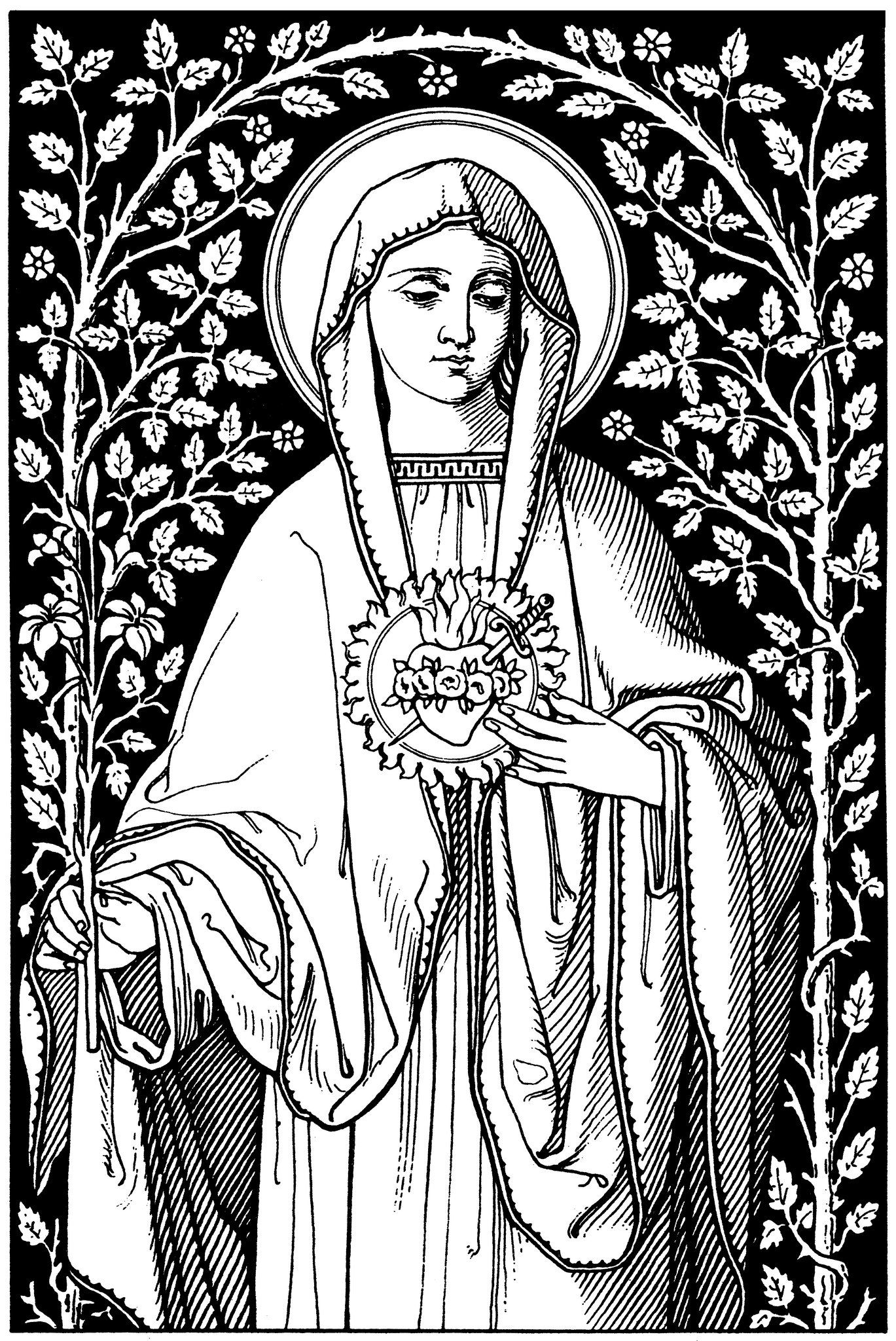
The embrace of it, the silence! … And that silence enfolded me, spoke to me, and spoke louder and more eloquently than any voice, and in the middle of that quiet, clean-smelling room, with the moon pouring its peacefulness in through the open window, with the warm night air, I realized truly whose house that was, O glorious Mother of God!
How did I ever get back out of there, into the world, after tasting the sweetness and the kindness of the love with which you welcome those that come to stay in your house, even only for a few days, O Holy Queen of Heaven, and Mother of my Christ? 4
TM then continues his prayerful address to the Blessed Mother, the patron of the religious order in whose house he now found himself – the house that would several months later become his home as well:
It is very true that the Cistercian order is your special territory and that those monks in white cowls are your special servants, servitores Sanctae Mariae. Their houses are all yours – Notre Dame, Notre Dame, all around the world. Notre Dame of Gethsemani there was still something of the bravery and simplicity and freshness of twelfth-century devotion, the vivid faith of St. Bernard of Clairvaux, and Adam of Perseigne, and Guerric of Igny and Aelred of Rievaulx and Robert of Molesme, here in the hills of Kentucky: and I think that the century of Chartres was most of all your century, my Lady, because it spoke you clearest not only in word but in glass and stone, showing you for who you are, most powerful, most glorious, Mediatrix of All Grace, and the High Queen of Heaven. 5
Endnotes
- Thomas Merton, The Seven Story Mountain. Boston: Houghton Mifflin Harcourt, 1948/1998, pages 339.
- Thomas Merton, The Seven Story Mountain, pages 350-351.
- Thomas Merton, The Seven Story Mountain, pages 339.
- Thomas Merton, The Seven Story Mountain, pages 352.
- Thomas Merton, The Seven Story Mountain, page 352.
 Julian of Norwich and Other Tibetan Lamas
Leave a comment