
Writing from Jesus College at Oxford on Easter Day 1927, Walter Evans-Wentz ends the “Preface” to his first edition of The Tibetan Book of the Dead with these words of commission:
Thus, under the best of auspices, this book is sent forth to the world, in the hope that it may contribute something to the sum total of Right Knowledge, and serve as one more spiritual strand in an unbreakable bond of good will and universal peace, binding East and West together in mutual respect and understanding, and in love such as overleaps every barrier of creed and caste and race. 1
Just prior to the preface, there are three quotations, two of which are from medieval Christian texts. The first quotation finds its roots in a text entitled Orologium Sapientiae [Clock of Wisdom] which was written in Latin in the 1330’s by the German Dominican Friar, Henry Suso (1295-1366). 2 The work takes the form of a dialogue between Sapientia [Wisdom] and a Disciple. A rendition of the book in Middle English is dated to the early 15th century and bears the title The Seven Points of True Love and Everlasting Wisdom. 3 Dr Wentz’s quotation is taken from Chapter 5 of the Middle English text which was included, with “modern English spelling,” in Frances Comper’s 1917 anthology: The Book of the Craft of Dying and Other Early English Tracts Concerning Death. The fifth chapter begins with a question of the Disciple:
Since it is that death [giveth] nought to man, but rather from him, taketh, and priveth him of that he hath, whereof profiteth this doctrine of death? Say me it seemeth wonderful, and therefore teach me heavenly master. 4
The words quoted by Dr. Wentz are part of the response of Sapientia herself to this query:
‘Thou shalt understand that it is a science most profitable, and passing all other sciences, for to learn to die. For a man to know that he shall die, that is common to all men; as much as there is no man that may ever live or he hath hope or trust thereof; but thou shalt find full few that have this cunning to learn to die . . . . I shall give thee the mystery of this doctrine; the which shall profit thee greatly to the beginning of ghostly health, and to a stable fundament of all virtues.’ 5
Some of the words which Dr. Wentz’s did not include in his quotation are worthy to repeat here for they can assist in understanding Julian’s initial grief as her pain and illness eases: “… ne the feeling of this ease was no full ease to me. For me thought I had lever have ben delivered of this world, for my hart was wilfully set therto.” 6 Thus, speaking of the ability to understand how to die, Henry Suso’s Sapientia teaches:
‘For that is a sovereign gift of God; sothly for a man to con [be able to] to die is for to have his heart and his soul at all times upward to those things that be above; that is to say that what time death cometh it find him ready, so that he receive it gladly, without any withdrawing; right as he that bideth the desired coming of his well-beloved fellow. But alas, for sorrow thou shalt find among some religious, as well as in vain seculars, full many that hate so much the death that unneth [scarcely] they will have it in mind, or hear speak thereof; for they would not go from this world. And the cause is for they learn not to con die …. Wherefore leave you vain things to them that be vain, and give good intent to my doctrine; the which shall profit thee more than choice gold, and than the books of all the philosophers that have been. And [that] this doctrine of me may more fervently move thee, and that it be alway dwelling and fixed in thy mind, (and) therefore under a fellowable ensample, I shall give thee the mystery of this doctrine; the which shall profit thee greatly to the beginning of ghostly health, and to a stable fundament of all virtues.’ 7
The sense of disorienting loss that one senses in Julian at this moment is like that of someone who is ready to “go from this world,” to be “delivered of this world,” and therefore, awaits without any hesitation or reluctance the advent of death as one might await the longed-for arrival of a dearly loved friend.
Endnotes
- W. Y. Evans-Wentz, The Tibetan Book of the Dead or The After-Death Experiences of the Bardo Plane, according to Lama Kazi’s Dawa-Samdup’s English Rendering. London: Oxford University Press, 1927, page ix.
- Scholar Bernard McGinn describes Henry Suso as “as student of Meister Eckhart, but one who was more open to visionary narrative to convey his message.” Professor McGinn continues: “Suso had one of the most powerful visual imaginations among male mystics of the late Middle Ages. To quote [historian] Jeffrey Hamburger, ‘Suso first saw and then read.’ Suso’s texts, both his four vernacular works that made up the collection he called the Exemplar and his popular Latin Horologium Sapientiae, are filled with imagistic showings.” (Bernard McGinn, “Visions and Visualizations in the Here and Hereafter.” The Harvard Theological Review, vol. 98, no. 3, 2005, page 236.)
- See Dirk Schultze, “Wisdom in the Margins: Text and Paratext in The Seven Points of True Love and Everlasting Wisdom,” Études anglaises, vol. 66, no. 3, 2013, pp. 341-356. In a January 2017 revision of his article, “Seek, Suffer, and Trust: Ese and Disease in Julian of Norwich,” Vincent Gillespie writes: “We are only just beginning to explore the ways that Julian’s showings interact with texts like Heinrich Suso’s Horologium sapientiae … and its vernacular translations.” Citation for original: Vincent Gillespie, “Seek, Suffer, and Trust: ‘Ese’ and ‘Disese’ in Julian of Norwich.” Studies in the Age of Chaucer, vol. 39, 2017, p. 129-158. Revision accessed at: download_file (ox.ac.uk)
- The Book of the Craft of Dying and Other Early Tracts Concerning Death. Editor: Frances M. M. Comper. New York: Longmans, Green, and co., 1917, page 105. Middle English: ‘Syþen hit is so þat deþ ȝiuith noȝte to man, but raþer takith fro and pryueþ hym of þat he hath, wher-of profetith this doctryne of deth? hit semith wonderfulle, and þerfore teche me, heuenly maister wisdome!’ Heinrich Seuse, “Orologium sapientiae or the seven poyntes of trewe wisdom, aus ms. Douce 114.” Editor: Carl Horstmann. Anglia: zeitschrift für Englische philologie. Vol. 10, Halle a. S: Max Niemeyer, 1888, page 357. Retrieved through Corpus of Middle English Prose and Verse: https://quod.lib.umich.edu/c/cme/CME00059/1:1?rgn=div1;view=toc
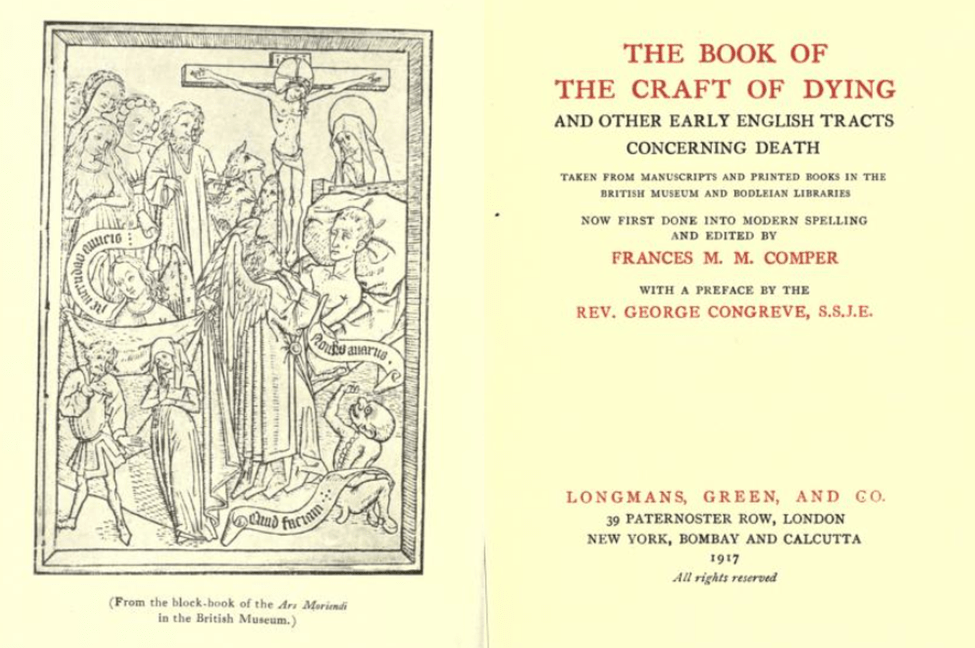
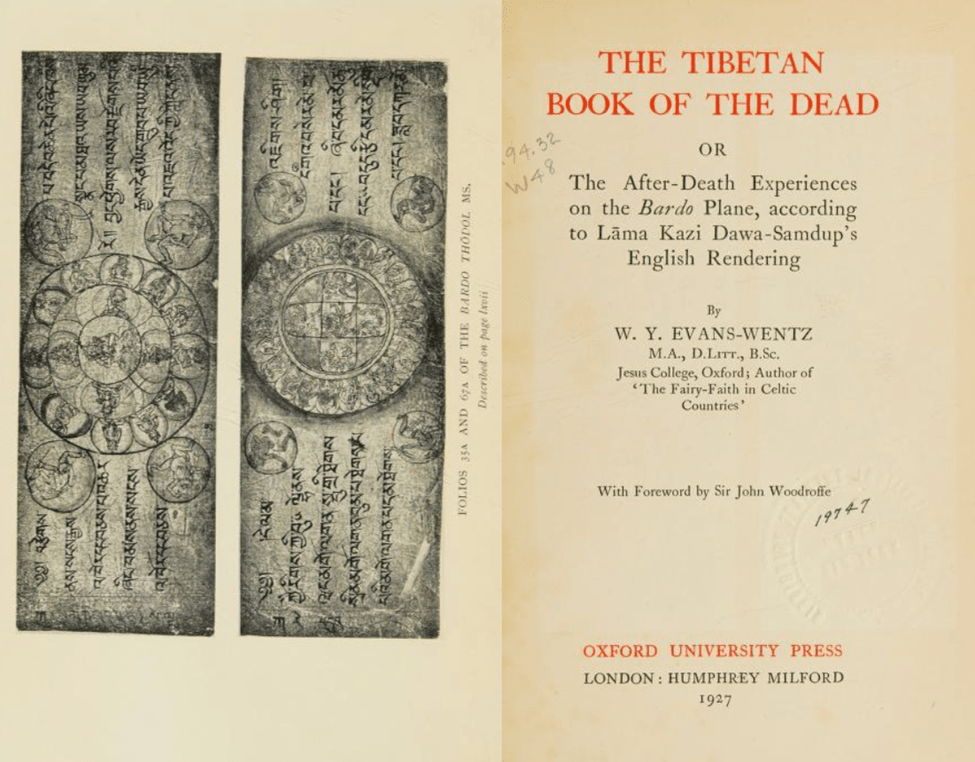
- The Book of the Craft of Dying and Other Early Tracts Concerning Death. Editor: Frances M. M. Comper. New York: Longmans, Green, and co., 1917, page 105. Middle English: ‘Þou schalte vndirstande þat hit is a science moost profitabil and passynge alle oþer sciences, forto dye . for a man to knowe þat hee schalle dye, þat is comun to alle men, in as myche as þere is no man þat may euere lyue or þat (hase) hope or triste þere-of: But þou schalte fynde fulfewe þat hauen þis kunnynge to kunne dye …. I schalle ȝeue the þe misterie of (t)his doctrine, þe whiche schal profet þe greetly to þe bigynnynge of goostly hele and to a stabil foundement of alle vertues.’ (Heinrich Seuse, “Orologium sapientiae or the seven poyntes of trewe wisdom, aus ms. Douce 114.” Editor: Carl Horstmann. Anglia: zeitschrift für Englische philologie. Vol. 10, Halle a. S: Max Niemeyer, 1888, pages 357-358. Retrieved through Corpus of Middle English Prose and Verse: https://quod.lib.umich.edu/c/cme/CME00059/1:1?rgn=div1;view=toc ) In his Introduction, Dr Evans-Wentz references Frances Comper’s anthology: “Furthermore, the once very popular medieval work De Arte Moriendi (cf. The Book of the Craft of Dying, ed. by F. M. M. Comper, London, 1917), of which there are many versions and variants in Latin, English, French, and other European languages, seems to suggest a still further infiltration of Oriental ideas, concerning death and existence after death, such as underlie both the Tibetan Bardo Thédol and the Egyptian Book of the Dead; and, in order to show this, a few of the most striking passages, found in the De Arte Moriendi cycle, which parallel textually certain parts of the Bardo Thédol, have been added in foot-notes to the Bardo Thédol translation from Mr. Comper’s excellent edition in The Book of the Craft of Dying.” (W. Y. Evans-Wentz, The Tibetan Book of the Dead or The After-Death Experiences of the Bardo Plane, according to Lama Kazi’s Dawa-Samdup’s English Rendering. London: Oxford University Press, 1927, pages 3-4). See below the front pages of Frances Comper’s 1917 text and those of Dr. Evans- Wentz’s 1927 book. While it may not have been intentional, there is a least some degree of family resemblance in the layout.
- Julian of Norwich, The Writings of Julian of Norwich, Eds, Nicholas Watson and Jacqueline Jenkins. University Park, The Pennsylvania State University Press, Chapter 3, lines 34-35, page 133.
- The Book of the Craft of Dying and Other Early Tracts Concerning Death. Editor: Frances M. M. Comper. New York: Longmans, Green, and co., 1917, page 105. Middle English: ‘[F]or þat is a souerayne ȝifte of god. Sooþly, a man forto kunne dye, is forto haue his herte and his soule in alle tymes vpwarde to þoo þinges þat beþ abouen; þat is to seye, þat, what-tyme deth comith, if fynde hym redy, so þat he receyue it gladdely with-oute any withdrawynge, riȝhte as hee þat abidith þe desired commynge of his dere-loued felowe. But alas for sorowe, þou schalte fynde in somme religyous als wel as in veyne seculers ful many þat haten so miche þe dethe þat vnnethes wole they haue hit in mynde or here speke þere-of. Þey wolde not go fro this worlde, and cause is: for þey lerid not to kunne dye …. Wherfore leue þou veyne thinges to hem þat beþ veyne, and ȝif good entente to my doctrine; þe whiche schalle profite þe moor þanne choyse golde and thanne the bokis of alle þe philosophres þat haue ben. And þat this doctrine of me more feruentlye meve the, and þat hit be alwey dwellynge ficchid in þy herte, þerfore vndir a felable ensaumple I schalle ȝeue the þe misterie of (t)his doctrine, þe whiche schal profet þe greetly to þe bigynnynge of goostly hele and to a stabil foundement of alle vertues.’ Heinrich Seuse, “Orologium sapientiae or the seven poyntes of trewe wisdom, aus ms. Douce 114.” Editor: Carl Horstmann. Anglia: zeitschrift für Englische philologie. Vol. 10, Halle a. S: Max Niemeyer, 1888, pages 357-358. Retrieved through Corpus of Middle English Prose and Verse: https://quod.lib.umich.edu/c/cme/CME00059/1:1?rgn=div1;view=toc
 Julian of Norwich and Other Tibetan Lamas
Leave a comment